Synapse AI
Enterprise Brand Governance & Multi-Modal Content Engine
“Global marketing teams were publishing off-brand messaging with inconsistent terminology and unvetted product claims across regional portals.”
An enterprise software corporation had over 250 marketers across North America, Europe, and Asia creating campaigns independently.
Generic AI writing tools led to hallucinated feature descriptions, unauthorized discount claims, and tone fragmentation across product verticals.
The global brand team took up to 4 days to review and approve copy, severely stifling campaign go-to-market speed.
Brand Voice Fragmentation: Marketing copy differed wildly in tone and compliance standards.
4-Day Review Cycle: Crippled weekly product launch agility.
Unvetted Product Claims: Risk of legal liabilities from hallucinated SLA promises.
Real-Time Tone Alignment & Multi-Channel Distribution Pipeline
An enterprise content engine that pairs fine-tuned brand style adapters with real-time vector brand guideline retrieval and tone-scoring filters.
Brand Context Injector
Dynamically inserts enterprise style rules and banned terminology into model context.
Tone Alignment Scorer
Computes stylistic distance between generated copy and reference brand voice embeddings.
Multi-Channel Sync
Publishes approved copy directly to HubSpot, Contentful, and social channels.
Live Interface & Inspection Workflows
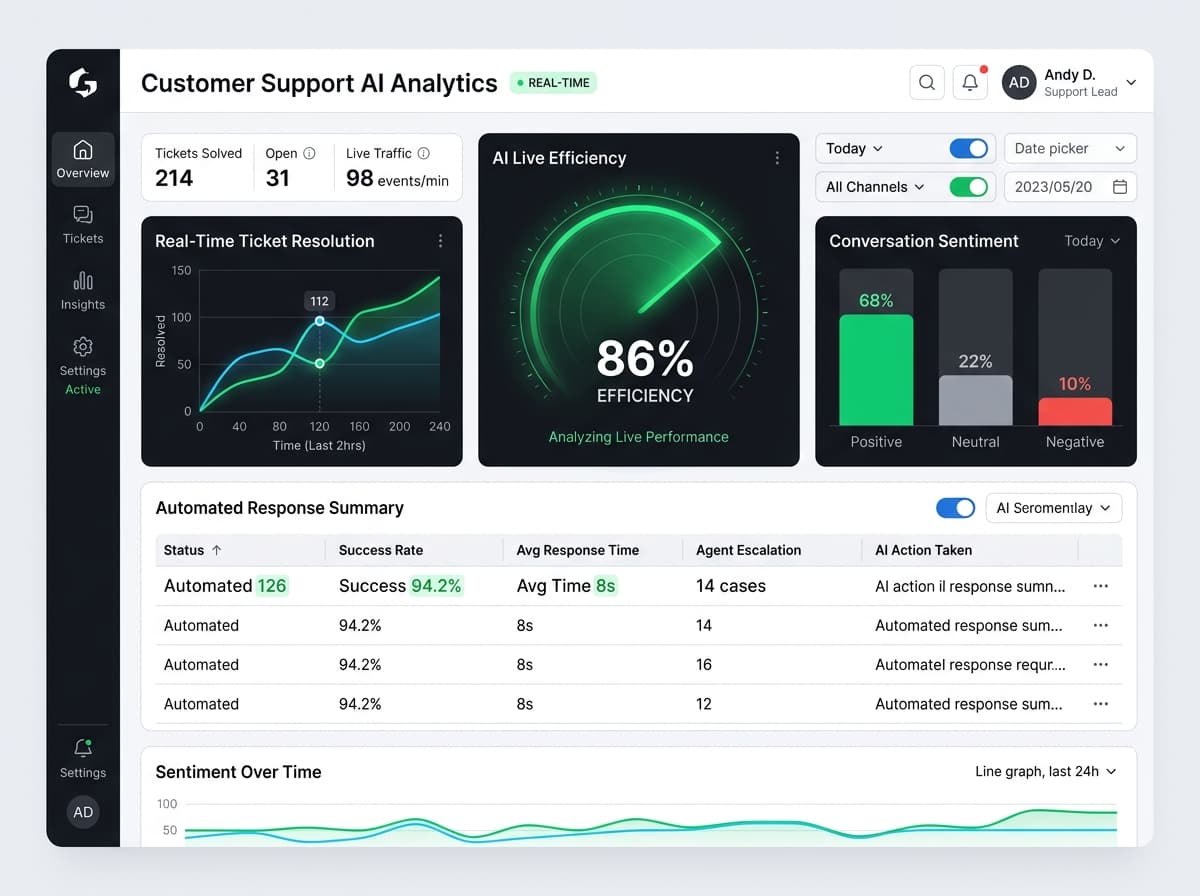
Brand Voice & Tone Compliance Inspector
Interactive style compliance inspector flagging off-brand phrasing, tone mismatches, and unauthorized terminology.

Enterprise Marketing Velocity Telemetry
Global telemetry dashboard tracking content production velocity, approval times, and regional adoption.
Architectural Trade-Offs
Embedding-Based Tone Distance Scoring Over Rule-Based Regex
Tone is subjective and contextual. Comparing semantic vector distance against canonical brand writing samples provided nuanced, accurate tone guidance that regex couldn't capture.
Edge API Caching for Reusable Global Campaign Assets
Marketing campaigns across regions share core messaging. Edge caching via Vercel Edge reduced generation latency from 3.2s to 120ms.
Operational Telemetry
Automated tone and terminology scoring
End-to-end multi-channel review cycle
Internal enterprise workspace adoption