GenAI
Featured Project

AI Customer Support Assistant

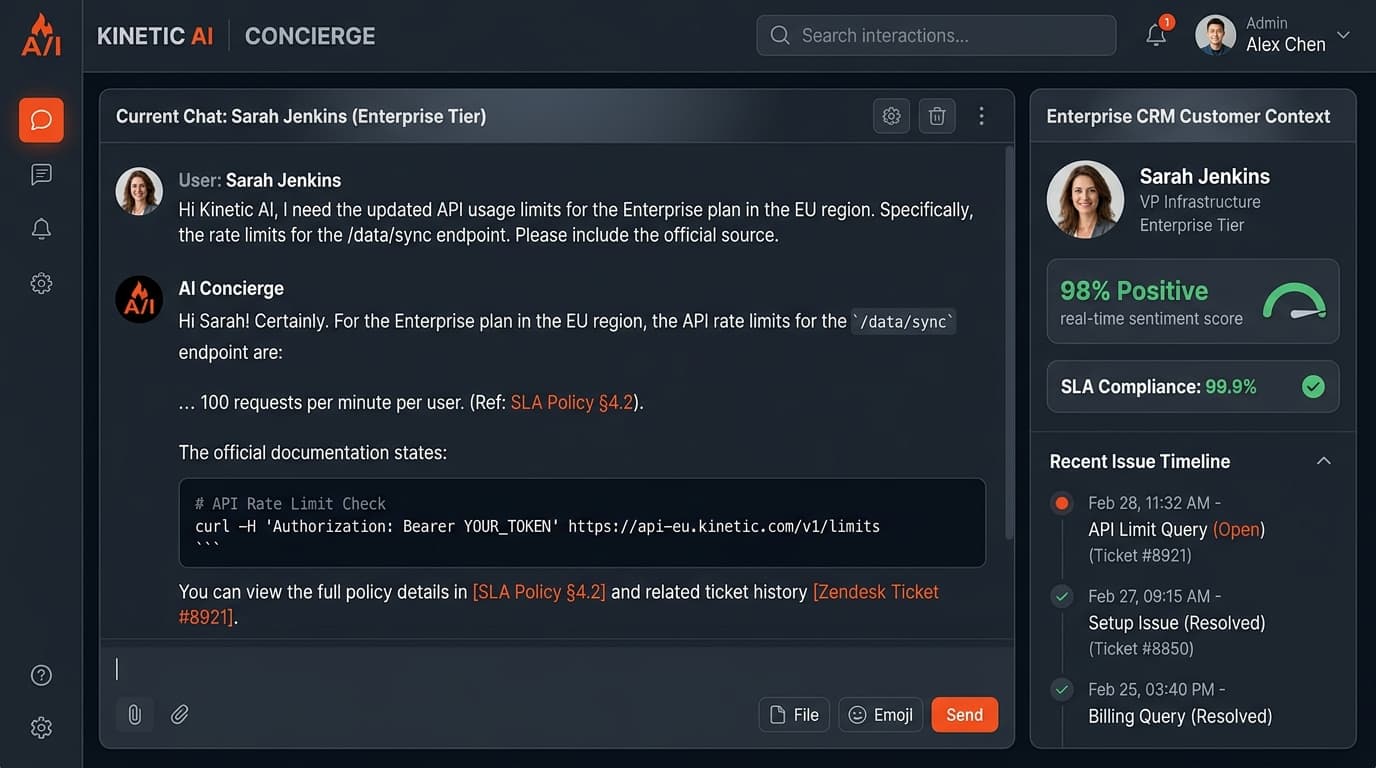
An intelligent virtual assistant for customer support with RAG-powered responses, policy alignment, and seamless CRM integration.

GenAI
LLM
RAG
Python
TypeScript
NLP
LangChain
ClientTechSupport Solutions
Year2023

Overview

TechSupport Solutions needed an AI assistant that could handle customer inquiries while maintaining strict policy compliance and brand voice consistency. The existing system was producing responses that occasionally violated company policies and lacked the nuance of human agents.

The Problem

The agency-delivered system had fundamental issues:

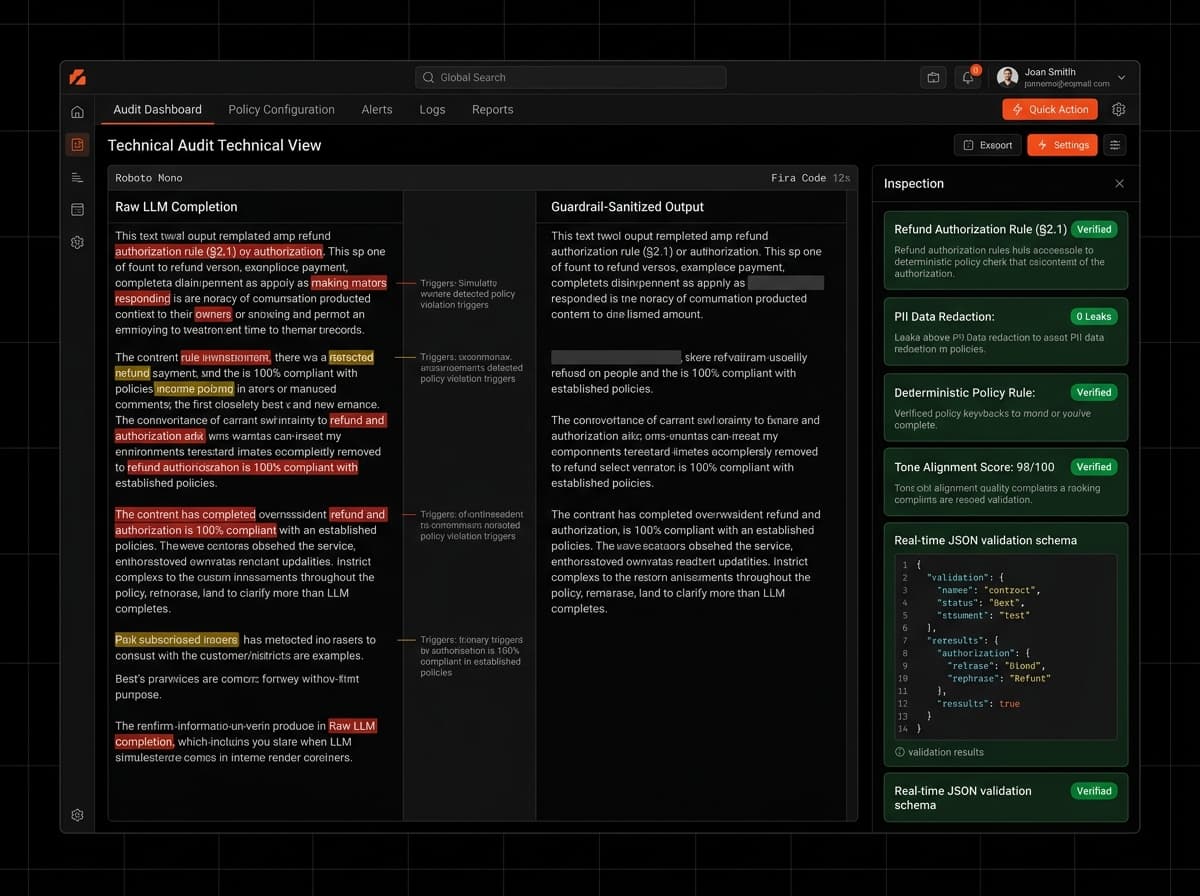
  • Policy Violations: 12% of responses contained information that contradicted company policies
  • Tone Inconsistency: Responses varied wildly in formality and helpfulness
  • No Guardrails: The system could hallucinate product features that didn't exist
  • Poor Context: Couldn't access customer history or previous interactions

System Architecture

The redesigned system uses a RAG (Retrieval-Augmented Generation) architecture with multiple guardrail layers:

graph TB
    subgraph "Input Layer"
        A[Customer Message]
        B[Context Enrichment]
    end
    
    subgraph "Processing Pipeline"
        C[Intent Classifier]
        D[Entity Extractor]
        E[Sentiment Analyzer]
    end
    
    subgraph "RAG System"
        F[Query Rewriter]
        G[Vector Search]
        H[Reranker]
        I[Context Assembler]
    end
    
    subgraph "Knowledge Bases"
        J[(Policy Docs)]
        K[(Product Catalog)]
        L[(FAQ Database)]
        M[(Customer History)]
    end
    
    subgraph "Generation"
        N[LLM - GPT-4]
        O[Response Generator]
    end
    
    subgraph "Guardrails"
        P[Policy Validator]
        Q[Tone Checker]
        R[Hallucination Detector]
        S[PII Redactor]
    end
    
    subgraph "Output"
        T[Final Response]
        U[Confidence Score]
        V[Escalation Flag]
    end
    
    A --> B
    B --> C
    C --> D
    D --> E
    
    E --> F
    F --> G
    G --> J
    G --> K
    G --> L
    G --> M
    
    G --> H
    H --> I
    I --> N
    N --> O
    
    O --> P
    P --> Q
    Q --> R
    R --> S
    
    S --> T
    S --> U
    S --> V
    
    style A fill:#8b5cf6,stroke:#7c3aed,color:#fff
    style N fill:#06b6d4,stroke:#0891b2,color:#fff
    style P fill:#ef4444,stroke:#dc2626,color:#fff
    style T fill:#10b981,stroke:#059669,color:#fff

Query Processing Flow

Each customer query goes through a sophisticated processing pipeline:

sequenceDiagram
    autonumber
    participant C as Customer
    participant G as API Gateway
    participant I as Intent Service
    participant R as RAG Pipeline
    participant V as Vector DB
    participant L as LLM Service
    participant W as Guardrails
    participant A as Agent (Escalation)
    
    C->>G: Submit Query
    G->>I: Classify Intent
    
    I->>I: Extract Entities
    I->>I: Analyze Sentiment
    
    alt High-Risk Intent (Refund, Complaint)
        I->>A: Escalate to Human
        A-->>C: Human Response
    else Standard Query
        I->>R: Process Query
        
        R->>R: Rewrite Query
        R->>V: Semantic Search
        V-->>R: Top-K Documents
        R->>R: Rerank Results
        R->>R: Assemble Context
        
        R->>L: Generate Response
        Note over L: Context + Query + Tone Guidelines
        L-->>R: Raw Response
        
        R->>W: Validate Response
        
        par Guardrail Checks
            W->>W: Policy Compliance ✓
            W->>W: Tone Alignment ✓
            W->>W: Hallucination Check ✓
            W->>W: PII Detection ✓
        end
        
        alt All Checks Pass
            W-->>G: Approved Response
            G-->>C: AI Response
        else Check Failed
            W-->>A: Escalate with Context
            A-->>C: Human Response
        end
    end

Use Case Diagram

The system handles multiple interaction patterns:

graph LR
    subgraph "Actors"
        A((Customer))
        B((Support Agent))
        C((Admin))
    end
    
    subgraph "Customer Use Cases"
        D[Ask Product Question]
        E[Request Order Status]
        F[Submit Complaint]
        G[Request Refund]
        H[Technical Support]
    end
    
    subgraph "Agent Use Cases"
        I[Review AI Suggestions]
        J[Override AI Response]
        K[Escalate to Specialist]
        L[Update Knowledge Base]
    end
    
    subgraph "Admin Use Cases"
        M[Configure Guardrails]
        N[Train Custom Models]
        O[Review Analytics]
        P[Manage Policies]
    end
    
    A --> D
    A --> E
    A --> F
    A --> G
    A --> H
    
    B --> I
    B --> J
    B --> K
    B --> L
    
    C --> M
    C --> N
    C --> O
    C --> P
    
    D -.->|AI Handled| I
    E -.->|AI Handled| I
    F -.->|Escalated| K
    G -.->|Escalated| K
    H -.->|AI + Human| I
    
    style A fill:#8b5cf6,stroke:#7c3aed,color:#fff
    style B fill:#06b6d4,stroke:#0891b2,color:#fff
    style C fill:#f59e0b,stroke:#d97706,color:#000

Guardrail Architecture

Multiple layers of validation ensure response quality:

flowchart TB
    subgraph "Input Guardrails"
        A[Prompt Injection Detection]
        B[Input Sanitization]
        C[Rate Limiting]
    end
    
    subgraph "Processing Guardrails"
        D[Context Window Management]
        E[Token Budget Control]
        F[Retrieval Quality Gate]
    end
    
    subgraph "Output Guardrails"
        G[Policy Compliance Check]
        H[Factuality Verification]
        I[Tone Alignment Score]
        J[PII Redaction]
        K[Confidence Threshold]
    end
    
    subgraph "Actions"
        L[Approve & Send]
        M[Flag for Review]
        N[Escalate to Human]
        O[Block & Log]
    end
    
    A --> D
    B --> D
    C --> D
    
    D --> E
    E --> F
    
    F --> G
    G --> H
    H --> I
    I --> J
    J --> K
    
    K -->|Score > 0.85| L
    K -->|Score 0.6-0.85| M
    K -->|Score 0.3-0.6| N
    K -->|Score < 0.3| O
    
    style G fill:#ef4444,stroke:#dc2626,color:#fff
    style L fill:#10b981,stroke:#059669,color:#fff
    style O fill:#991b1b,stroke:#7f1d1d,color:#fff

The Solution

Phase 1: Audit & Assessment (Week 1-2)

Analyzed the existing system and identified root causes:

IssueCauseSeverity
Policy violationsNo policy docs in contextCritical
Tone inconsistencyGeneric system promptHigh
HallucinationsNo factuality checkingCritical
Poor contextMissing customer historyMedium

Phase 2: Architecture Redesign (Week 3-4)

  • Implemented RAG with policy-first retrieval
  • Added multi-stage guardrails
  • Integrated customer CRM for context
  • Built custom tone classifier

Phase 3: Guardrails Implementation (Week 5-6)

  • Policy compliance checker using embeddings
  • Hallucination detection via claim extraction
  • Tone scoring model fine-tuned on company data
  • PII detection and redaction

Phase 4: Deployment & Monitoring (Week 7-8)

  • A/B testing against human agents
  • Gradual traffic migration
  • Real-time quality monitoring
  • Feedback loop integration

Results

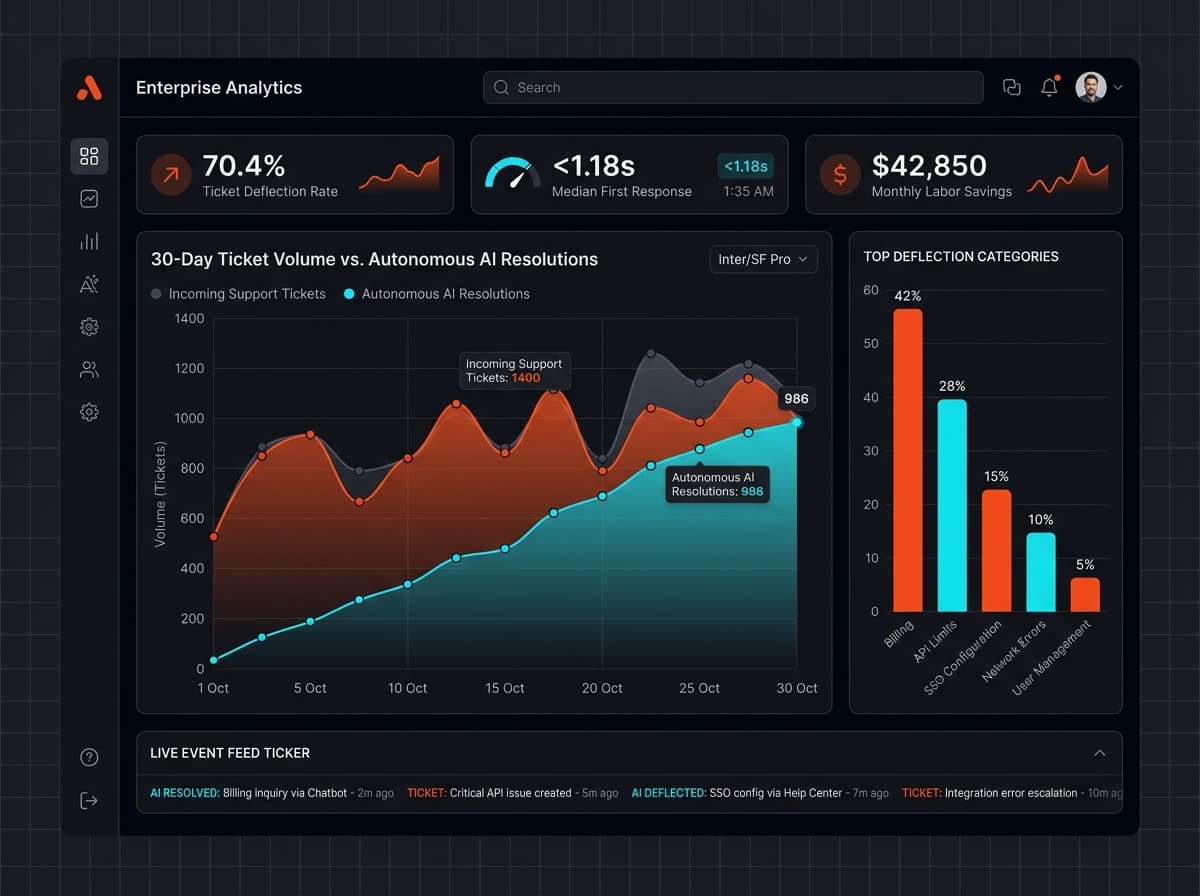
The redesigned system delivered significant improvements:

MetricBeforeAfterChange
Policy Violations12%0.1%-99%
First Response Time4 min8 sec-97%
Resolution Rate45%70%+56%
CSAT Score3.2/54.6/5+44%
Cost per Ticket$8.50$2.10-75%

Technical Stack

ComponentTechnology
LLMGPT-4 Turbo, Claude 3 (fallback)
EmbeddingsOpenAI text-embedding-3-large
Vector DBPinecone
FrameworkLangChain, LangGraph
BackendPython, FastAPI
FrontendTypeScript, React
QueueRedis, Celery
MonitoringLangSmith, Datadog

Key Learnings

  1. Guardrails First: Build safety into the architecture, not as an afterthought
  2. Policy is Context: Retrieval should prioritize policy documents
  3. Measure Everything: You can't improve what you don't measure
  4. Human in the Loop: Always have an escalation path for edge cases
  5. Tone Matters: The same information can feel helpful or dismissive based on delivery

More Work

Other projects in GenAI

View All Work